PEPTIDE THERAPY · INJURY & RECOVERY
Peptide Therapy for Injury & Recovery
Peptides can be part of recovery. They aren’t the starting point.
Pain can point to a place. It cannot tell you, by itself, what failed there. A painful tendon, strained muscle, unstable joint, or recovering surgical site can create similar symptoms while requiring very different decisions. TC Regen starts with the tissue, the diagnosis, your medical history, and what you are trying to get back to. Then a physician determines whether peptide therapy belongs anywhere in the plan.

01 — DIFFERENT TISSUE
Different Tissue. Different Problem. Different Plan.
A violin string, a climbing rope, and a sail can all sit under tension. Damage one, and the way it fails depends on what it was built to do. The body works the same way. Tendon, ligament, muscle, and post-procedure recovery may overlap in where they hurt — but they do not behave the same under load, injury, or recovery. That is why TC Regen does not start with “Which peptide do you want?” We start with “What tissue are we dealing with — and what happened to it?”

TENDON
The problem is often in the handoff.
A tendon is where muscular force becomes movement. When that handoff starts breaking down, pain may be the most obvious symptom — but it does not tell you whether the issue is overload, degeneration, partial tearing, surrounding inflammation, or another pain generator. That distinction matters. Because treating “tendon pain” is not the same as understanding the tendon.
EXPLORE TENDON & ELBOW CONDITIONS
→
LIGAMENT
When a joint stops feeling trustworthy.
Most people never think about a ligament when everything is working. They notice it when a joint begins to feel unstable, hesitant, swollen, or different under load. Pain may be part of the story. So are stability, tear severity, surrounding structures, activity demands, and where the injury sits in the recovery process. The question is not simply “Where does it hurt?” It is “What has this joint lost?”
EXPLORE KNEE & JOINT CONDITIONS
→
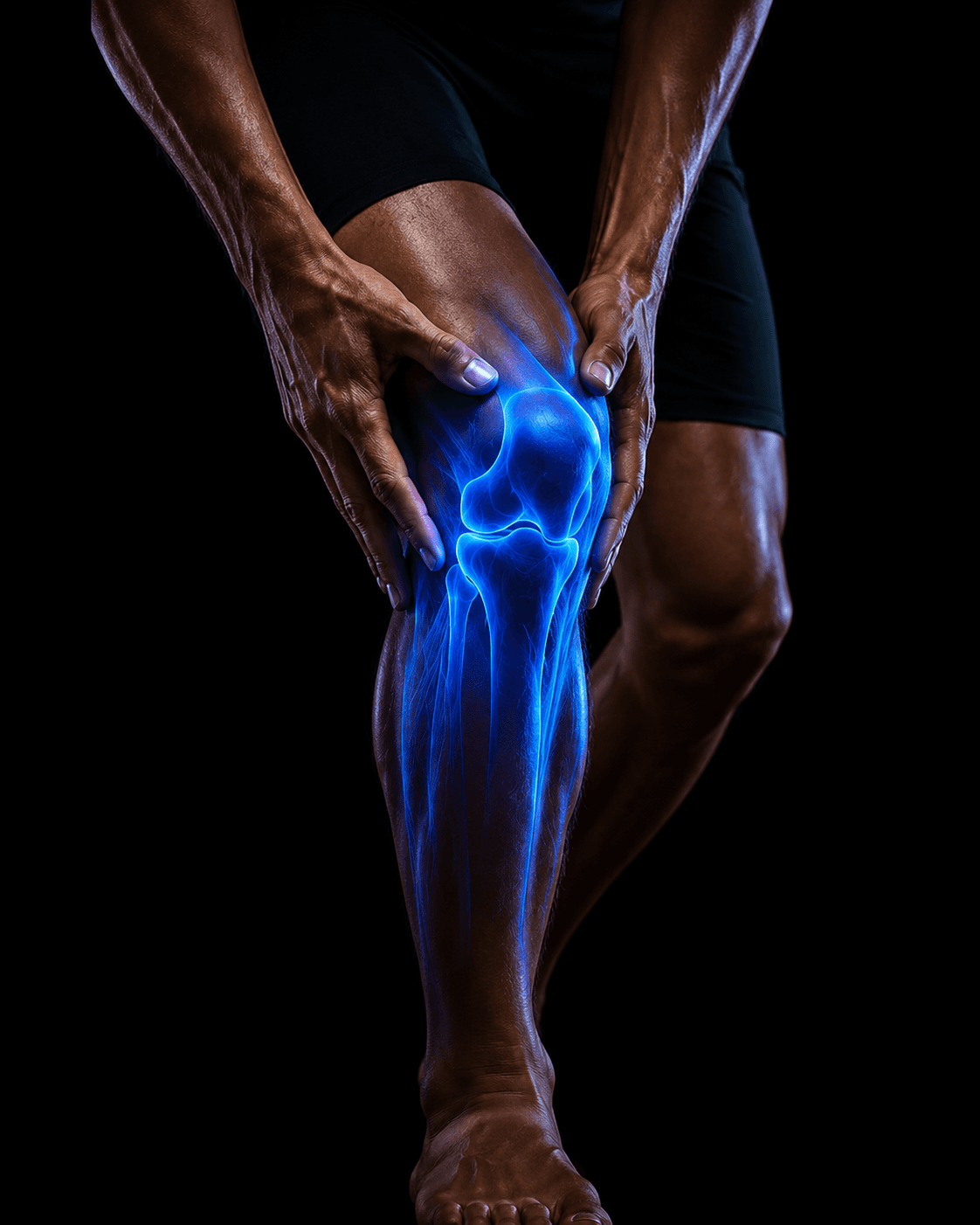

MUSCLE
A pulled thread is not the same as a torn seam.
Two people can point to the exact same spot and describe nearly identical pain. One may be dealing with irritation or a mild strain. The other may have a more significant tissue injury. Location matters. Severity matters. Previous injury matters. So do the tendon and joint around it. There is no honest one-size-fits-all recovery protocol.
EXPLORE MUSCLE STRAINS & TEARS
→
POST-PROCEDURE
Recovery is already in motion.
After a procedure, the body is not waiting for someone to press “start.” Recovery has already begun. Rehabilitation, medications, tissue healing, activity restrictions, and the physician’s plan are already interacting. The question is not “What else can we add?” It is “What belongs in this recovery — and when?”
EXPLORE RECOVERY AFTER PROCEDURES
→

NOT SURE WHICH CATEGORY FITS?
You do not have to diagnose yourself first.
Tell us what hurts, what happened, and what you are trying to get back to. We will start there.
02 — DIAGNOSIS FIRST
Pain Is the Headline. Diagnosis Is the Story Underneath.
Pain is designed to get your attention. It is not designed to give you a differential diagnosis. The same knee pain can originate from cartilage, meniscus, tendon, bone, inflammation, or referred pain. The same shoulder pain can involve rotator cuff tissue, bursa, labrum, arthritis, surrounding tendons, or the neck. Knowing where you hurt matters. Knowing why you hurt changes the plan.
01 — LISTEN
Start with the story.
Symptoms, when they began, what makes them worse, prior injuries, previous treatment, and what recovery needs to look like for your life.
02 — EXAMINE
Look beyond where it hurts.
A physician-led musculoskeletal evaluation helps narrow down the structures and mechanics that may be driving the problem.
03 — IDENTIFY
Confirm when needed.
Existing imaging is reviewed and additional imaging or diagnostics may be considered when clinically appropriate.
04 — PLAN
Match the treatment to the diagnosis.
Peptide therapy may be discussed when appropriate — or another recovery strategy may make more sense.
The treatment follows the diagnosis — not the other way around.
CLINICAL ANSWER
Why does diagnosis come before peptide therapy?
Because pain location does not reliably identify the injured structure or determine which treatment is appropriate. TC Regen first evaluates the condition, tissue involved, medical history, prior treatment, functional goals, and available imaging or diagnostics. Peptide therapy is considered only if the physician determines it may have a role in that individual plan.
Know what hurts. Let us help determine why.

03 — WHERE PEPTIDES MAY FIT
A Sophisticated Treatment Can Still Be the Wrong Treatment.
The question is not whether a therapy sounds advanced. The question is whether it belongs in this case.
Peptide therapy is a broad category. Different peptides have different biological targets, evidence, regulatory status, potential risks, and clinical considerations. At TC Regen, the conversation begins with whether peptide therapy is appropriate at all — not which product a patient saw online. For someone being evaluated for musculoskeletal recovery, a physician may consider peptide therapy as one part of a broader plan after reviewing the diagnosis, medical history, current medications, prior treatment, activity demands, and recovery goals. Other parts of that plan may include rehabilitation, activity modification, imaging, conventional orthopedic care, or another regenerative or interventional option.
The most advanced treatment in the room is useless if it is solving the wrong problem.
CLINICAL ANSWER
Can peptide therapy be part of an injury recovery plan?
Potentially. Whether peptide therapy has a role depends on the specific therapy being considered, the diagnosis, patient history, available evidence, regulatory status, risks, alternatives, and the physician’s clinical judgment. It should not be treated as a universal injury-recovery protocol.
BPC-157 · WHY IT GETS ATTENTION
BPC-157 Has Become One of the Most Talked-About Recovery Peptides for a Reason.
Tendons. Ligaments. Muscle. Bone.
These are exactly the tissues that have made BPC-157 one of the most discussed peptides in sports medicine and recovery circles.
Preclinical research has reported encouraging findings across muscle, tendon, ligament and bone injury models, including effects on biological pathways involved in blood-vessel formation, inflammation and tissue repair.
And while human research is still small, it isn’t nonexistent.
In one retrospective knee-pain series, 11 of 12 patients receiving BPC-157 alone reported significant improvement in pain.
That is enough to make BPC-157 worth understanding. It is not enough to turn it into a one-size-fits-all promise.
CLINICAL ANSWER
Why are people interested in BPC-157 for injury recovery?
Because laboratory and animal research has reported effects relevant to muscle, tendon, ligament and bone recovery, and a small retrospective human knee-pain study reported improvement in most treated patients. The interest is scientifically understandable. The limitation is that high-quality human trials are still lacking, so BPC-157 remains investigational rather than an established standard treatment.
Why is BPC-157 called a “healing peptide” online?
BPC-157 is frequently described online as a “healing peptide” or “recovery peptide” because preclinical studies have reported tissue-repair effects across several musculoskeletal models. Those labels are marketing shorthand, not established human clinical claims.
35
PRECLINICAL STUDIES
1
HUMAN MUSCULOSKELETAL STUDY
11 / 12
REPORTED SIGNIFICANT PAIN IMPROVEMENT
Early evidence. Not proof of effectiveness.
The evidence is early, but the interest is scientifically understandable: the review literature is dominated by preclinical work, while the available human signal remains small and retrospective. That is why BPC-157 is worth discussing in a diagnosis-first conversation—not treating as a universal answer.
Curious About BPC-157?
Start With Whether It Fits Your Recovery.
The internet can tell you why people are talking about BPC-157. It cannot examine your tendon, review your imaging, understand what you have already tried, or decide whether the peptide you researched actually fits the problem you have.
That is where TC Regen comes in.
Bring the questions. Bring the research. Bring the peptide name you have been reading about. We’ll start with you.

IMPORTANT CLINICAL CONTEXT
BPC-157 is not FDA-approved for musculoskeletal injury treatment. Human evidence remains limited, and FDA has identified limited safety information and potential quality and immunogenicity concerns involving compounded BPC-157. Any discussion should include the evidence, regulatory status, potential risks, alternatives and the patient’s individual clinical picture.
COMPETITIVE ATHLETE?
BPC-157 is prohibited under the World Anti-Doping Agency’s S0 Non-Approved Substances category.
SEE ATHLETE CONSIDERATIONS ↓
EVIDENCE SOURCES
2025 BPC-157 orthopaedic sports-medicine systematic review · human knee-pain retrospective study · FDA BPC-157 / compounding information
04 — PROMISING ≠ PROVEN
A Signal in a Lab Is Not the Same as a Result in a Patient.
Innovation and certainty are not the same thing.
Treatment suitability, evidence, and regulatory status vary by compound and intended use. No outcome is guaranteed.
Some recovery-focused peptides have generated significant attention because laboratory and animal research has explored biological pathways relevant to musculoskeletal tissue and recovery. But preclinical biology does not automatically establish a clinical benefit in humans. For several compounds widely discussed online for musculoskeletal recovery, robust human evidence remains limited. A physician should explain what is known, what remains uncertain, regulatory status, potential risks, reasonable alternatives, and whether the therapy makes sense for the diagnosis.
“Promising” should start a conversation. It should not end one.
CLINICAL ANSWER
Is peptide therapy proven to heal tendon or ligament injuries?
Not as a general claim. Evidence varies substantially by compound, and for several peptides promoted online for musculoskeletal recovery, human clinical evidence remains limited. Patients should discuss the specific therapy, evidence, risks, and alternatives with a qualified physician.
EVIDENCE & SOURCES
Peer-reviewed literature, FDA information, and anti-doping resources are selected and maintained by the TC Regen clinical content team as relevant to the therapy under discussion.
05 — RECOVERY
Recovery Moves More Like a Tide Than a Stopwatch.
Progress can move forward, level off, change direction, and move forward again.
The tissue involved, severity of injury, age of the problem, rehabilitation, previous procedures, overall health, sleep, activity demands, and treatment selection can all influence the recovery story. That is why TC Regen should not promise “two weeks,” “30 days,” or another universal timeline. The responsible approach is to establish a baseline, monitor what changes, and let the plan respond to new information.
EVALUATE
Understand the problem and establish a clinical baseline.
DECIDE
Discuss whether peptide therapy — or another option — fits the diagnosis.
MONITOR
Track symptoms, function, tolerance, and rehabilitation progress when appropriate.
REASSESS
Continue, adjust, stop, or choose a different path based on the clinical response.
Good recovery plans are allowed to change their mind when the evidence changes.
Your next step does not have to be a treatment. It can be an answer.
COMPETITIVE ATHLETES
Your Body May Not Know the Rulebook. Your Eligibility Does.
Some substances discussed in peptide and recovery settings may be prohibited under anti-doping rules. If you compete under WADA, USADA, NCAA, professional-sport, or another governing body, tell your physician before considering peptide therapy.
CHECK YOUR SPORT’S RULES BEFORE TREATMENT →
CHECK YOUR SPORT’S RULES
CLINICAL TEAM
Three specialties. One question: What actually fits your case?
TC Regen matches the problem to the clinician whose expertise fits the diagnosis — because a knee, a tendon and a spine should not all enter the same treatment funnel.
MEET THE TC REGEN TEAM
→
CLINICAL TEAM
Three specialties. One question: What actually fits your case?
DR. DAVID DELIBERATO
Board-Certified Orthopedic Surgeon
Joint and orthopedic evaluation
DR. MEGAN MCGUIRE
Double Board-Certified in Physical Medicine & Rehabilitation and Pain Medicine
Musculoskeletal and pain evaluation
DR. BEN SCHNEE — Orthopedic Spine Surgeon — Spine evaluation
CLINICAL QUESTIONS, CLEAR ANSWERS
Frequently Asked Questions
What is peptide therapy?
Can peptide therapy heal a tendon or ligament injury?
Is peptide therapy FDA-approved for injury recovery?
How quickly does peptide therapy work?
Can peptide therapy be used with physical therapy?
Do you offer peptide therapy in Naples and Fort Myers?
I already know which peptide I want. Can I request it?
I’m a competitive athlete. Can I use peptides?
START WITH THE EVALUATION
You Do Not Need to Arrive With the Answer.
That is what the evaluation is for. Tell us what is keeping you from training, moving, recovering, or feeling like yourself. TC Regen will start with the problem, connect you with the appropriate physician, and help you understand which options — peptide therapy included — may or may not fit.
The treatment comes after the diagnosis. That is the point.
PEPTIDE THERAPY · INJURY & RECOVERY
Peptide Therapy for Injury & Recovery
Peptides can be part of recovery. They aren’t the starting point.
Pain can point to a place. It cannot tell you, by itself, what failed there. A painful tendon, strained muscle, unstable joint, or recovering surgical site can create similar symptoms while requiring very different decisions. TC Regen starts with the tissue, the diagnosis, your medical history, and what you are trying to get back to. Then a physician determines whether peptide therapy belongs anywhere in the plan.
01 — DIFFERENT TISSUE
Different Tissue. Different Problem. Different Plan.
A violin string, a climbing rope, and a sail can all sit under tension. Damage one, and the way it fails depends on what it was built to do. The body works the same way. Tendon, ligament, muscle, and post-procedure recovery may overlap in where they hurt — but they do not behave the same under load, injury, or recovery. That is why TC Regen does not start with “Which peptide do you want?” We start with “What tissue are we dealing with — and what happened to it?”
TENDON
The problem is often in the handoff.
A tendon is where muscular force becomes movement. When that handoff starts breaking down, pain may be the most obvious symptom — but it does not tell you whether the issue is overload, degeneration, partial tearing, surrounding inflammation, or another pain generator. That distinction matters. Because treating “tendon pain” is not the same as understanding the tendon.
EXPLORE TENDON & ELBOW CONDITIONS
→
LIGAMENT
When a joint stops feeling trustworthy.
Most people never think about a ligament when everything is working. They notice it when a joint begins to feel unstable, hesitant, swollen, or different under load. Pain may be part of the story. So are stability, tear severity, surrounding structures, activity demands, and where the injury sits in the recovery process. The question is not simply “Where does it hurt?” It is “What has this joint lost?”
EXPLORE KNEE & JOINT CONDITIONS
→
MUSCLE
A pulled thread is not the same as a torn seam.
Two people can point to the exact same spot and describe nearly identical pain. One may be dealing with irritation or a mild strain. The other may have a more significant tissue injury. Location matters. Severity matters. Previous injury matters. So do the tendon and joint around it. There is no honest one-size-fits-all recovery protocol.
EXPLORE MUSCLE STRAINS & TEARS
→
POST-PROCEDURE
Recovery is already in motion.
After a procedure, the body is not waiting for someone to press “start.” Recovery has already begun. Rehabilitation, medications, tissue healing, activity restrictions, and the physician’s plan are already interacting. The question is not “What else can we add?” It is “What belongs in this recovery — and when?”
EXPLORE RECOVERY AFTER PROCEDURES
→
NOT SURE WHICH CATEGORY FITS?
You do not have to diagnose yourself first.
Tell us what hurts, what happened, and what you are trying to get back to. We will start there.
02 — DIAGNOSIS FIRST
Pain Is the Headline. Diagnosis Is the Story Underneath.
Pain is designed to get your attention. It is not designed to give you a differential diagnosis. The same knee pain can originate from cartilage, meniscus, tendon, bone, inflammation, or referred pain. The same shoulder pain can involve rotator cuff tissue, bursa, labrum, arthritis, surrounding tendons, or the neck. Knowing where you hurt matters. Knowing why you hurt changes the plan.
01 — LISTEN
Start with the story.
Symptoms, when they began, what makes them worse, prior injuries, previous treatment, and what recovery needs to look like for your life.
02 — EXAMINE
Look beyond where it hurts.
A physician-led musculoskeletal evaluation helps narrow down the structures and mechanics that may be driving the problem.
03 — IDENTIFY
Confirm when needed.
Existing imaging is reviewed and additional imaging or diagnostics may be considered when clinically appropriate.
04 — PLAN
Match the treatment to the diagnosis.
Peptide therapy may be discussed when appropriate — or another recovery strategy may make more sense.
The treatment follows the diagnosis — not the other way around.
CLINICAL ANSWER
Why does diagnosis come before peptide therapy?
Because pain location does not reliably identify the injured structure or determine which treatment is appropriate. TC Regen first evaluates the condition, tissue involved, medical history, prior treatment, functional goals, and available imaging or diagnostics. Peptide therapy is considered only if the physician determines it may have a role in that individual plan.
Know what hurts. Let us help determine why.
03 — WHERE PEPTIDES MAY FIT
A Sophisticated Treatment Can Still Be the Wrong Treatment.
The question is not whether a therapy sounds advanced. The question is whether it belongs in this case.
Peptide therapy is a broad category. Different peptides have different biological targets, evidence, regulatory status, potential risks, and clinical considerations. At TC Regen, the conversation begins with whether peptide therapy is appropriate at all — not which product a patient saw online. For someone being evaluated for musculoskeletal recovery, a physician may consider peptide therapy as one part of a broader plan after reviewing the diagnosis, medical history, current medications, prior treatment, activity demands, and recovery goals. Other parts of that plan may include rehabilitation, activity modification, imaging, conventional orthopedic care, or another regenerative or interventional option.
The most advanced treatment in the room is useless if it is solving the wrong problem.
CLINICAL ANSWER
Can peptide therapy be part of an injury recovery plan?
Potentially. Whether peptide therapy has a role depends on the specific therapy being considered, the diagnosis, patient history, available evidence, regulatory status, risks, alternatives, and the physician’s clinical judgment. It should not be treated as a universal injury-recovery protocol.
BPC-157 · WHY IT GETS ATTENTION
BPC-157 Has Become One of the Most Talked-About Recovery Peptides for a Reason.
Tendons. Ligaments. Muscle. Bone.
These are exactly the tissues that have made BPC-157 one of the most discussed peptides in sports medicine and recovery circles.
Preclinical research has reported encouraging findings across muscle, tendon, ligament and bone injury models, including effects on biological pathways involved in blood-vessel formation, inflammation and tissue repair.
And while human research is still small, it isn’t nonexistent.
In one retrospective knee-pain series, 11 of 12 patients receiving BPC-157 alone reported significant improvement in pain.
That is enough to make BPC-157 worth understanding. It is not enough to turn it into a one-size-fits-all promise.
35
PRECLINICAL STUDIES
1
HUMAN MUSCULOSKELETAL STUDY
11 / 12
REPORTED SIGNIFICANT PAIN IMPROVEMENT
Early evidence. Not proof of effectiveness.
The evidence is early, but the interest is scientifically understandable: the review literature is dominated by preclinical work, while the available human signal remains small and retrospective. That is why BPC-157 is worth discussing in a diagnosis-first conversation—not treating as a universal answer.
CLINICAL ANSWER
Why are people interested in BPC-157 for injury recovery?
Because laboratory and animal research has reported effects relevant to muscle, tendon, ligament and bone recovery, and a small retrospective human knee-pain study reported improvement in most treated patients. The interest is scientifically understandable. The limitation is that high-quality human trials are still lacking, so BPC-157 remains investigational rather than an established standard treatment.
Why is BPC-157 called a “healing peptide” online?
BPC-157 is frequently described online as a “healing peptide” or “recovery peptide” because preclinical studies have reported tissue-repair effects across several musculoskeletal models. Those labels are marketing shorthand, not established human clinical claims.
Curious About BPC-157?
Start With Whether It Fits Your Recovery.
The internet can tell you why people are talking about BPC-157. It cannot examine your tendon, review your imaging, understand what you have already tried, or decide whether the peptide you researched actually fits the problem you have.
That is where TC Regen comes in.
Bring the questions. Bring the research. Bring the peptide name you have been reading about. We’ll start with you.

IMPORTANT CLINICAL CONTEXT
BPC-157 is not FDA-approved for musculoskeletal injury treatment. Human evidence remains limited, and FDA has identified limited safety information and potential quality and immunogenicity concerns involving compounded BPC-157. Any discussion should include the evidence, regulatory status, potential risks, alternatives and the patient’s individual clinical picture.
COMPETITIVE ATHLETE?
BPC-157 is prohibited under the World Anti-Doping Agency’s S0 Non-Approved Substances category.
SEE ATHLETE CONSIDERATIONS ↓
EVIDENCE SOURCES
2025 BPC-157 orthopaedic sports-medicine systematic review · human knee-pain retrospective study · FDA BPC-157 / compounding information
04 — PROMISING ≠ PROVEN
A Signal in a Lab Is Not the Same as a Result in a Patient.
Innovation and certainty are not the same thing.
Treatment suitability, evidence, and regulatory status vary by compound and intended use. No outcome is guaranteed.
Some recovery-focused peptides have generated significant attention because laboratory and animal research has explored biological pathways relevant to musculoskeletal tissue and recovery. But preclinical biology does not automatically establish a clinical benefit in humans. For several compounds widely discussed online for musculoskeletal recovery, robust human evidence remains limited. A physician should explain what is known, what remains uncertain, regulatory status, potential risks, reasonable alternatives, and whether the therapy makes sense for the diagnosis.
“Promising” should start a conversation. It should not end one.
CLINICAL ANSWER
Is peptide therapy proven to heal tendon or ligament injuries?
Not as a general claim. Evidence varies substantially by compound, and for several peptides promoted online for musculoskeletal recovery, human clinical evidence remains limited. Patients should discuss the specific therapy, evidence, risks, and alternatives with a qualified physician.
EVIDENCE & SOURCES
Peer-reviewed literature, FDA information, and anti-doping resources are selected and maintained by the TC Regen clinical content team as relevant to the therapy under discussion.
05 — RECOVERY
Recovery Moves More Like a Tide Than a Stopwatch.
Progress can move forward, level off, change direction, and move forward again.
The tissue involved, severity of injury, age of the problem, rehabilitation, previous procedures, overall health, sleep, activity demands, and treatment selection can all influence the recovery story. That is why TC Regen should not promise “two weeks,” “30 days,” or another universal timeline. The responsible approach is to establish a baseline, monitor what changes, and let the plan respond to new information.
EVALUATE
Understand the problem and establish a clinical baseline.
DECIDE
Discuss whether peptide therapy — or another option — fits the diagnosis.
MONITOR
Track symptoms, function, tolerance, and rehabilitation progress when appropriate.
REASSESS
Continue, adjust, stop, or choose a different path based on the clinical response.
Good recovery plans are allowed to change their mind when the evidence changes.
Your next step does not have to be a treatment. It can be an answer.
COMPETITIVE ATHLETES
Your Body May Not Know the Rulebook. Your Eligibility Does.
Some substances discussed in peptide and recovery settings may be prohibited under anti-doping rules. If you compete under WADA, USADA, NCAA, professional-sport, or another governing body, tell your physician before considering peptide therapy.
CHECK YOUR SPORT’S RULES BEFORE TREATMENT →
CHECK YOUR SPORT’S RULES
CLINICAL TEAM
Three specialties. One question: What actually fits your case?
TC Regen matches the problem to the clinician whose expertise fits the diagnosis — because a knee, a tendon and a spine should not all enter the same treatment funnel.
MEET THE TC REGEN TEAM
→
CLINICAL TEAM
Three specialties. One question: What actually fits your case?
DR. DAVID DELIBERATO
Board-Certified Orthopedic Surgeon
Joint and orthopedic evaluation
DR. MEGAN MCGUIRE
Double Board-Certified in Physical Medicine & Rehabilitation and Pain Medicine
Musculoskeletal and pain evaluation
DR. BEN SCHNEE — Orthopedic Spine Surgeon — Spine evaluation
CLINICAL QUESTIONS, CLEAR ANSWERS
Frequently Asked Questions
What is peptide therapy?
Can peptide therapy heal a tendon or ligament injury?
Is peptide therapy FDA-approved for injury recovery?
How quickly does peptide therapy work?
Can peptide therapy be used with physical therapy?
Do you offer peptide therapy in Naples and Fort Myers?
I already know which peptide I want. Can I request it?
I’m a competitive athlete. Can I use peptides?
START WITH THE EVALUATION
You Do Not Need to Arrive With the Answer.
That is what the evaluation is for. Tell us what is keeping you from training, moving, recovering, or feeling like yourself. TC Regen will start with the problem, connect you with the appropriate physician, and help you understand which options — peptide therapy included — may or may not fit.
The treatment comes after the diagnosis. That is the point.
PEPTIDE THERAPY · INJURY & RECOVERY
Peptide Therapy for Injury & Recovery
Peptides can be part of recovery. They aren’t the starting point.
Pain is a flare in the dark. It tells you where to look — not what you’ll find. Two people can point to the same knee, shoulder, or tendon and be dealing with entirely different problems underneath. TC Regen starts by figuring out what is actually injured, what your body is asking of that tissue, and what you’re trying to get back to. Then a physician determines whether peptide therapy belongs anywhere in the plan.

01 — DIFFERENT TISSUE
Different Tissue. Different Problem. Different Plan.
A violin string, a climbing rope, and a sail can all sit under tension. Damage one, and the way it fails depends on what it was built to do. The body works the same way. Tendon, ligament, muscle, and post-procedure recovery may overlap in where they hurt — but they do not behave the same under load, injury, or recovery. That is why TC Regen does not start with “Which peptide do you want?” We start with “What tissue are we dealing with — and what happened to it?”
TENDON
The problem is often in the handoff.
A tendon is where muscular force becomes movement. When that handoff starts breaking down, pain may be the most obvious symptom — but it does not tell you whether the issue is overload, degeneration, partial tearing, surrounding inflammation, or another pain generator. That distinction matters. Because treating “tendon pain” is not the same as understanding the tendon.
EXPLORE TENDON & ELBOW CONDITIONS
→
LIGAMENT
When a joint stops feeling trustworthy.
Most people never think about a ligament when everything is working. They notice it when a joint begins to feel unstable, hesitant, swollen, or different under load. Pain may be part of the story. So are stability, tear severity, surrounding structures, activity demands, and where the injury sits in the recovery process. The question is not simply “Where does it hurt?” It is “What has this joint lost?”
EXPLORE KNEE & JOINT CONDITIONS
→
MUSCLE
A pulled thread is not the same as a torn seam.
Two people can point to the exact same spot and describe nearly identical pain. One may be dealing with irritation or a mild strain. The other may have a more significant tissue injury. Location matters. Severity matters. Previous injury matters. So do the tendon and joint around it. There is no honest one-size-fits-all recovery protocol.
EXPLORE MUSCLE STRAINS & TEARS
→
POST-PROCEDURE
Recovery is already in motion.
After a procedure, the body is not waiting for someone to press “start.” Recovery has already begun. Rehabilitation, medications, tissue healing, activity restrictions, and the physician’s plan are already interacting. The question is not “What else can we add?” It is “What belongs in this recovery — and when?”
EXPLORE RECOVERY AFTER PROCEDURES
→
NOT SURE WHICH CATEGORY FITS?
You do not have to diagnose yourself first.
Tell us what hurts, what happened, and what you are trying to get back to. We will start there.
02 — DIAGNOSIS FIRST
Pain Is the Headline. Diagnosis Is the Story Underneath.
Pain gets your attention. Diagnosis explains what that signal may actually mean.
01 LISTEN
02 EXAMINE
03 IDENTIFY
04 PLAN
01 — LISTEN
Start with the story.
Symptoms, when they began, what makes them worse, prior injuries, previous treatment, and what recovery needs to look like for your life.
NO FIXED MENU. NO TREATMENT SELECTED BEFORE THE DIAGNOSIS.
You know where it hurts. We help figure out why.
Start with the problem — not the treatment.
03 — WHERE PEPTIDES MAY FIT
A Sophisticated Treatment Can Still Be the Wrong Treatment.
The question is not whether a therapy sounds advanced. The question is whether it belongs in this case.
Peptide therapy is a broad category. Different peptides have different biological targets, evidence, regulatory status, potential risks, and clinical considerations. At TC Regen, the conversation begins with whether peptide therapy is appropriate at all — not which product a patient saw online. For someone being evaluated for musculoskeletal recovery, a physician may consider peptide therapy as one part of a broader plan after reviewing the diagnosis, medical history, current medications, prior treatment, activity demands, and recovery goals. Other parts of that plan may include rehabilitation, activity modification, imaging, conventional orthopedic care, or another regenerative or interventional option.
The most advanced treatment in the room is useless if it is solving the wrong problem.
CLINICAL ANSWER
Can peptide therapy be part of an injury recovery plan?
Potentially. Whether peptide therapy has a role depends on the specific therapy being considered, the diagnosis, patient history, available evidence, regulatory status, risks, alternatives, and the physician’s clinical judgment. It should not be treated as a universal injury-recovery protocol.
BPC-157 · WHY IT GETS ATTENTION
BPC-157 Gets Attention. The Evidence Deserves It Too.
Tendons. Ligaments. Muscle. Bone.
These are the tissues that have made BPC-157 one of the most discussed peptides in sports medicine and recovery.
Preclinical research has reported encouraging findings across muscle, tendon, ligament and bone injury models.
Human research is still limited — but it isn’t nonexistent.
In one retrospective knee-pain series, 11 of 12 patients receiving BPC-157 alone reported significant improvement in pain.
That is enough to make BPC-157 worth understanding. It is not enough to turn it into a one-size-fits-all promise.
35
PRECLINICAL STUDIES
1
HUMAN MUSCULOSKELETAL STUDY
11 / 12
REPORTED SIGNIFICANT PAIN IMPROVEMENT
Early evidence. Not proof of effectiveness.
The evidence is early, but the interest is scientifically understandable: the review literature is dominated by preclinical work, while the available human signal remains small and retrospective. That is why BPC-157 is worth discussing in a diagnosis-first conversation—not treating as a universal answer.
CLINICAL ANSWER
Why are people interested in BPC-157 for injury recovery?
Because laboratory and animal research has reported effects relevant to muscle, tendon, ligament and bone recovery, and a small retrospective human knee-pain study reported improvement in most treated patients. The interest is scientifically understandable. The limitation is that high-quality human trials are still lacking, so BPC-157 remains investigational rather than an established standard treatment.
Curious About BPC-157?
Start With Whether It Fits Your Recovery.
The internet can tell you why people are talking about BPC-157. It cannot examine your injury, review your imaging, or decide whether it actually fits the problem you have.
Bring the questions.
We’ll start with you.
IMPORTANT CLINICAL CONTEXT
BPC-157 is not FDA-approved for musculoskeletal injury treatment. Human evidence remains limited, and FDA has identified limited safety information and potential quality and immunogenicity concerns involving compounded BPC-157. Any discussion should include the evidence, regulatory status, potential risks, alternatives and the patient’s individual clinical picture.
COMPETITIVE ATHLETE?
BPC-157 is prohibited under the World Anti-Doping Agency’s S0 Non-Approved Substances category.
SEE ATHLETE CONSIDERATIONS ↓
EVIDENCE SOURCES
2025 BPC-157 orthopaedic sports-medicine systematic review · human knee-pain retrospective study · FDA BPC-157 / compounding information
04 — PROMISING ≠ PROVEN
A Signal in a Lab Is Not the Same as a Result in a Patient.
Innovation and certainty are not the same thing.
WHAT WE KNOW
Preclinical research has explored biological pathways relevant to musculoskeletal tissue and recovery.
WHAT WE DON’T KNOW YET
For several compounds discussed online, robust human clinical evidence remains limited.
Preclinical biology does not automatically establish a clinical benefit in humans.
For several compounds widely discussed online for musculoskeletal recovery, robust human evidence remains limited.
A physician should explain what is known, what remains uncertain, regulatory status, potential risks, reasonable alternatives, and whether the therapy makes sense for the diagnosis.
CLINICAL PERSPECTIVE
“Promising” should start a conversation. It should not end one.
Treatment suitability, evidence, and regulatory status vary by compound and intended use. No outcome is guaranteed.
CLINICAL ANSWER
Is peptide therapy proven to heal tendon or ligament injuries?
Not as a general claim. Evidence varies substantially by compound, and for several peptides promoted online for musculoskeletal recovery, human clinical evidence remains limited. Patients should discuss the specific therapy, evidence, risks, and alternatives with a qualified physician.
EVIDENCE & SOURCES
Peer-reviewed literature, FDA information, and anti-doping resources are selected and maintained by the TC Regen clinical content team as relevant to the therapy under discussion.
05 — RECOVERY
Recovery Moves More Like a Tide Than a Stopwatch.
Progress can move forward, level off, change direction, and move forward again.
The tissue involved, severity of injury, rehabilitation, previous procedures, health, sleep, activity demands, and treatment selection can all influence the recovery story.
EVALUATE
Understand the problem and establish a clinical baseline.
DECIDE
Discuss whether peptide therapy — or another option — fits the diagnosis.
MONITOR
Track symptoms, function, tolerance, and rehabilitation progress when appropriate.
REASSESS
Continue, adjust, stop, or choose a different path based on the clinical response.
Recovery isn’t a contract with a deadline. A good plan changes when the information changes.
COMPETITIVE ATHLETES
Your Body May Not Know the Rulebook. Your Eligibility Does.
Some substances discussed in peptide and recovery settings may be prohibited under anti-doping rules. If you compete under WADA, USADA, NCAA, professional-sport, or another governing body, tell your physician before considering peptide therapy.
CHECK YOUR SPORT’S RULES
CLINICAL TEAM
Three specialties. One question: What actually fits your case?
TC Regen matches the problem to the clinician whose expertise fits the diagnosis — because a knee, a tendon and a spine should not all enter the same treatment funnel.
MEET THE TC REGEN TEAM
→
CLINICAL TEAM
Three specialties. One question: What actually fits your case?
DR. DAVID DELIBERATO
Board-Certified Orthopedic Surgeon
Joint and orthopedic evaluation
DR. MEGAN MCGUIRE
Double Board-Certified in Physical Medicine & Rehabilitation and Pain Medicine
Musculoskeletal and pain evaluation
DR. BEN SCHNEE — Orthopedic Spine Surgeon — Spine evaluation
CLINICAL QUESTIONS, CLEAR ANSWERS
Frequently Asked Questions
What is peptide therapy?
Can peptide therapy heal a tendon or ligament injury?
Is peptide therapy FDA-approved for injury recovery?
How quickly does peptide therapy work?
Can peptide therapy be used with physical therapy?
Do you offer peptide therapy in Naples and Fort Myers?
I already know which peptide I want. Can I request it?
I’m a competitive athlete. Can I use peptides?
START WITH THE EVALUATION
You Do Not Need to Arrive With the Answer.
That is what the evaluation is for. Tell us what is keeping you from training, moving, recovering, or feeling like yourself. TC Regen will start with the problem, connect you with the appropriate physician, and help you understand which options — peptide therapy included — may or may not fit.
The treatment comes after the diagnosis. That is the point.